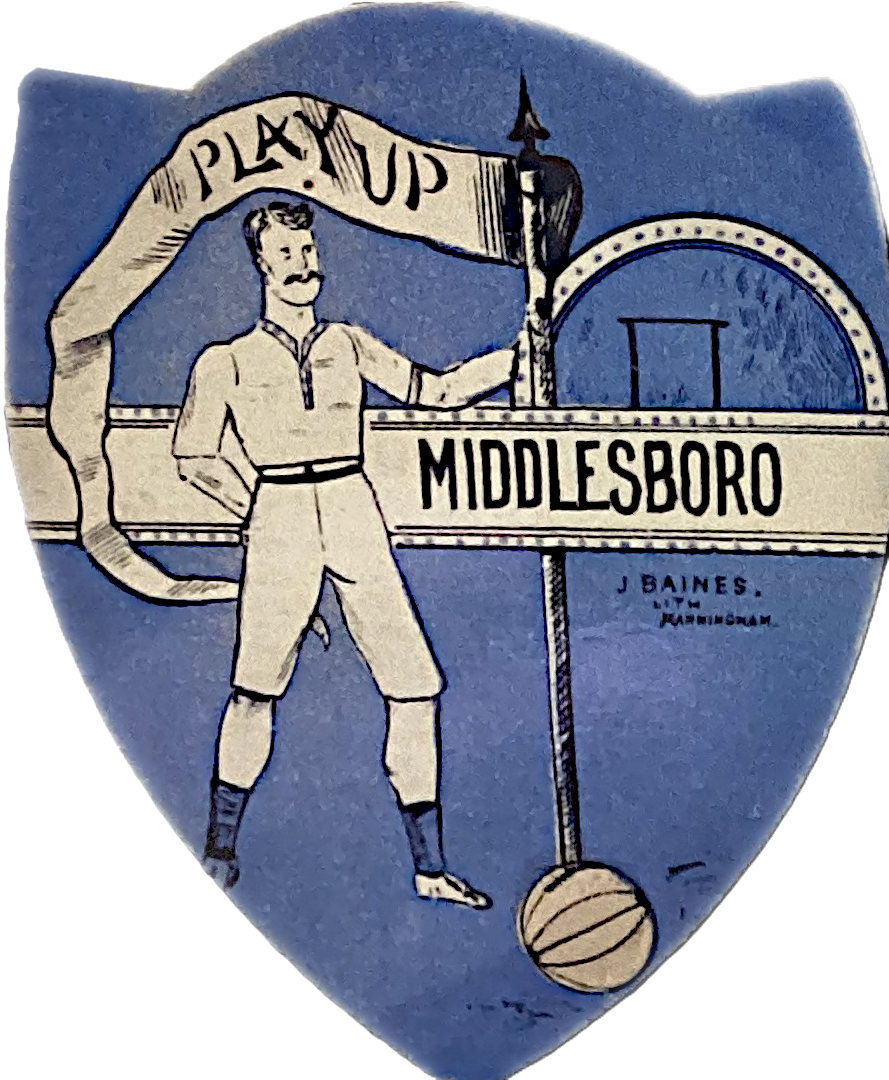
In 1876, mainly due to the growth of the iron and steel industries, the town of Middlesbrough was a rapidly developing commercial hub. With a burgeoning population of over 50,000, connected to the main railway system of the day, its economic expansion was assured. As yet, the River Tees had not been bridged, so all commercial trade was plied via the river or by horse-drawn carters.
The main sport played in the town at that time was cricket which began around 1847. By 1855 the various teams in the area had amalgamated to become known as Middlesbrough Cricket Club and it was the members of that organisation who were instrumental in the formation of a local football team.
Since 1863 a set of rules for Association Football had been in existence and the game was mainly played in public schools and universities. However, by the 1870s it had spread further afield with London and Sheffield the foremost urban areas of popularity.
Hard evidence gleaned from local newspapers of the time, such as the Middlesbrough Daily Exchange and corroborated later by the original club members who were present at the initial meetings, states that 1876 was
indeed the pivotal year of the town’s football club formation.
Apparently the members of the cricket club were seeking to stay fit over the winter months and had first discussed the forming of a football association in the gym at the Albert Park Hotel, Linthorpe Road on Friday 20th October 1876.
This inaugural meeting was quickly followed by a further gathering a month later at the Talbot Hotel on the corner of South Street. The main driving force behind the club’s inception were primarily middle class gentlemen of the district with a mix of accountants, solicitors and clerks including; Fredrick Thompson, a southerner no less, together with Jackson Ewbank, Charles Booth, and Fred Hardisty.
Local folklore claims that the dinner served at the Talbot Hotel was a tripe supper, a local “delicacy” of the area. Unfortunately there is no physical evidence to substantiate what was on the menu that evening, so the real
gastronomic delights on offer will have to remain a mystery.
During the winter of 1876/77 an all-comers practice match was staged in Albert Park which attracted over seventy participants wearing a wide variety of garb from rugby kits to overcoats. No changing room facilities were
available, so the trialists changed at home and walked to the venue. Very swiftly most of the neophytes fell by the wayside as the more accomplished players such as Oswald “Ossie” Cochrane, Fred Thompson, Jackson Ewbank
and Charles Booth all displayed their proficient skills and the obvious caucus of a team began to take shape.
At that time in the North-East of England there was only a handful of football teams in existence including Barnard Castle, South Bank and the Tyne Club.
“Ossie” Cochrane had friendship connections with the latter and it was suggested in some quarters that the Tyne Club may have provided the opposition for Boro’s first fixture. Although this may well have been the case, there is again no written evidence to verify that particular claim.
Similarly Tees Wanderers, a team containing mainly local rugby players, may have played Boro prior to their first official match at the Archery Ground in Albert Park as that game was reported in the local press as a return fixture. But as with the Tyne Club game no positive documentation exists to support that assertion either, just the hearsay recollections of former players in later life.
What is undeniable is that Middlesbrough Football Club and Tees Wanderers Rugby Club drew 1-1 in a game played under Association rules on February 24 th 1877 and that Jackson Ewbank was the scorer of the first official goal. The encounter was recorded for posterity in both the North-eastern Daily Gazette and Weekly Exchange. So until proven otherwise we are confirming that this was indeed The Boro’s inaugural fixture.
1876-77 Fixtures
| Date | Opponents | Competition | Result |
| 24/2/1877 | Tees Wanderers (h) | Friendly | D 1-1 |

